• HOME
  • REVIEWS
    • Books
      • Africa
      • Arabia
      • Asia
      • Eastern Europe
      • Latin America
      • South Pacific
      • USA & Canada
      • Western Europe
    • Other Media
      • Art
      • Film
  • EDITING SERVICES
  • ABOUT
    • Bio
    • Creative Writing
      • Clear Out the Static in Your Attic: A Writer’s Guide for Transforming Artifacts into Art
      • Polska, 1994
    • Artist Statement
    • Artist Resume
    • Contact
    • Events
    • Professional Portfolio
  • BLOGROLL

A Geography of Reading

"It is by reading novels, stories, and myths that we come to understand the world in which we live." -Orhan Pamuk

The Waves of Intimacy with Virginia Woolf

January 2, 2013 by Isla McKetta, MFA 2 Comments

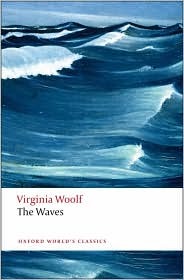
The Waves Virginia WoolfMicheline Aharonian Marcom once said to me that books teach you how to read them, and though I was lost when I opened The Waves by Virginia Woolf, I fumbled onward until, as Miłosz would have said, “I surrendered and it carried me and I swam.” As the best books will do, this book challenged me as a reader and writer and made me think hard about my own life.
The Structure of Interspersion

The book is starts with a short poetic passage in italics which describes the dawning of the day at the edge of the sea.

The sun had not yet risen. The sea was indistinguishable from the sky, except that the sea was slightly creased as if a cloth had wrinkles in it.

Additional italicized sections serve as markers of the passing day (and lifetime) throughout the book. It’s perhaps an obvious analogy and one I’ve used myself, but Woolf handles it beautifully. Without the passing time denoted in these passages, I would have had a more difficult time understanding what was happening with the rest of the text.

The space between those italic sections, the bulk of the book, initially looks like a dialogue:

“I see a ring,” said Bernard, “hanging above me. It quivers and hangs in a loop of light.”

“I see a slab of pale yellow,” said Susan, “spreading away until it meets a purple stripe.”

“I hear a sound,” said Rhoda, “cheep, chirp; cheep, chirp; going up and down.”

But it quickly becomes evident this is something different than ordinary dialogue. Though there is often more than one speaker and their words build on each other, they are not interacting with each other. At first I wasn’t sure if the characters were even speaking aloud, but once I was entranced by them it ceased to matter.

This creates an effect similar to a classical Greek chorus because it conveys a unity of experience, but the characters do not speak in unison. Instead, each contributes a slightly individual perspective which allows us to see the other characters through their eyes. This variance is important because there is no other exposition. The entire story is told in these weirdly interwoven monologues.

The Closeness of Interior Monologues

Though it took me awhile to get into the spirit of this book, it knocked me on my writing ass. In my new book, I’ve challenged myself to work in third person. Reading Woolf’s dialogues (which often come off as interior monologues) I am reminded how very much exposition can come from the self-exploration of first person. Whether to include sections in first person is something I’ll be carefully considering as I revise for structure. The other thing I will be looking at, again influenced by Woolf, is the way two completely separate narratives feed off of one another to tell one story.

Creating a Sense of Belonging

Woolf has found a way of conveying the depth of friendship. As I followed Bernard, Susan, and friends through the moments from a childhood classroom to a restaurant in young adulthood and beyond as their progressing lives intersect, the enormity of their shared experience became intoxicating. The choral speaking felt as though they were only truly whole when they were together in body or spirit.

Friends like these are the people who who know and accept you for all that you are. In my life, I have been lucky enough to be part of more than one group like this. Though my introversion requires long spaces of solitude, those moments of true kinship and understanding are unequalable. I’m thinking back to a recent night with writer friends when we said what we really thought and finished each other’s sentences. I knew how important this is one-on-one (as in a marriage), but I don’t think I realized how deeply important and satisfying this kind of friend group is until I experienced it through Woolf’s strange and bewitching narrative.

What have you read lately that challenged you as a reader, writer, and person?

If this review made you want to read the book, pick up a copy of The Waves from Bookshop.org. Your purchase keeps indie booksellers in business and I receive a commission.

Filed Under: Western Europe Tagged With: first person narrative, friendship, the waves, virginia woolf

On Being and Nothingness: Why I’d Make a Rotten Philosopher

December 9, 2012 by Isla McKetta, MFA 4 Comments

Being and Nothingness SartreThough I’m obsessed with philosophy, we have a tortured relationship. The whole concept of discussing an idea and its implications to death is pure heaven for me. But I like to be right (i.e. not WRONG) and I usually feel inadequately prepared to properly discuss important ideas. In reading Being and Nothingness by Jean-Paul Sartre, there were ideas I wanted to share with friends, but I felt like I couldn’t without going to Wikipedia and determining first that I hadn’t misread the book.
The Flawed Way I Read This Book

Sometimes you have to be who you are. I don’t even remember the first 200 pages of this book. I read them too long ago and the language was thick and I never got my head around it. I don’t remember the last 100 either; I was so immersed in the implications of being-for-others. I didn’t skip anything, but I rapidly skimmed entire sections.

My Relationship with the Other

I became obsessed with how I had defined myself in Others. I thought about the Others I acknowledged and the people who did not contribute to my definition of me at all. I started to think about how being-for-others affected each of my relationships and what it all means for my next book.

I took a hard look at friendships I maintained, contact I had severed, and people I had simply let go. In thinking of Others, I climbed entirely within myself. And then I wanted to reach out to friends to discuss the ways in which we had defined each other. I became filled with forgiveness for others and wished for others to forgive me. I very nearly got sidetracked and failed to finish the book at all.

Many Ways of being Right

I think back to times when I have crucified friends because they saw the world differently than I. I want to be open to the world, not in a castle of correct facts, and I am glad for this moment of learning that knowledge is broad. By being imperfect, we can be open. We can learn and risk and grow. We can find the truths beyond the facts. I have no doubt that I would fail any exam on Being and Nothingness. But I am delighted with the knowledge the book helped me create for myself. I am still slightly uncomfortable with not having gotten all I was “supposed to” from the book, but I got what I most needed.

The lesson I will take from reading this book is that I’m not in some seminar where if I misread a sentence I will be taken down by a peer. Any bit of knowledge that I pick up is important and right in that it spurs my thinking and helps me get the places that I needed to go. If I misunderstand Sartre’s interpretation of Heidegger, no lives will be lost. And I don’t have to go back to Heidegger to determine if I agree with that interpretation. Though I will never pass Philosophy 101, I am open to knowledge and a wide expanse of human truth, and I am comfortable with that. Maybe that’s the difference between a philosopher and a student of philosophy.

Opening Up to Explore Truth

In the coming days I will take Sartre’s ideas and I will examine my long-term obsession with the living for the outside world versus living for oneself. I will continue to try to understand how we can take our relationship with an Other and turn it around to define ourselves. I will begin to learn how to forgive myself for my imperfections. And though my understanding is still imperfect, I will finally allow myself to use my new book to explore the relationship between our internal and external lives.

If this review made you want to read the book, pick up a copy of Being and Nothingness from Bookshop.org. Your purchase keeps indie booksellers in business and I receive a commission.

Filed Under: Books, Western Europe Tagged With: Being and Nothingness, inside-out, Jean-Paul Sartre, Openness, Truth

Silken Anaphora in Hélène by Deborah Poe

December 2, 2012 by Isla McKetta, MFA Leave a Comment

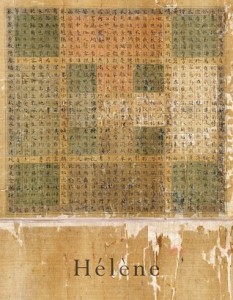
Helene Deborah Poe

It’s obvious to even the most casual reader how much I love novellas. But my love for poetry is something I barely admit to myself (though that may be obvious to you as well). When I had the chance to borrow a novella in verse—Hélène by Deborah Poe—I greedily snatched the book from my co-worker and read it all up in a day.

Poe’s narrative tells of a girl manufacturing silk in 19th century France who imagines the romance of making silk in China instead. The writing is concise and evocative, and while I read the book very quickly, I could have spent months enjoying all the possibilities on the page. I copied down one of the pages so I could unpack it here with you.

The benefactor offered something other than work on farms.

The benefactor set out to board, lodge, and clothe girls as well as give them wages.

The benefactor built the silk factory.

The benefactor taught the art of silk.

No, the benefactor taught the manufacturing of silk.

The benefactor became the hero of the country.

The benefactor found docile bodies.

What I first loved about this page was Poe’s use of anaphora (the repetition of a phrase at the beginning of a sentence). You’ve likely heard me go on and on about anaphora and epistrophe before. These forms of rhetorical repetition are something I use in my own writing and they rarely fail to entrance me.

In this selection, Poe starts (almost) every line with “The benefactor.” This grounds the selection (she does not use this same form on any other page) and provides a strong framework for the reader to explore—the benefactor. As a reader we get used to the idea of having a benefactor even as we begin to understand what the benefactor does. At first he seems benevolent—offering work away from farms where girls are cared for and paid. He creates something new by building a silk factory. He teaches the art of making silk.

But then Poe breaks the anaphora by starting the fifth line with “No.” Our feelings about the benefactor are about to change. The art of making silk and the manufacturing of silk are not the same. The dream is not the same as reality. Now that I’ve seen the benefactor is not exactly as he appears, I will question the statements about him more. The next line where he becomes “the hero of the country” is tainted now because we know there is more to know about him.

Poe brings this duplicity home when the benefactor finds “docile bodies.” They could be docile for working, but it is impossible to ignore the understated implication that he is using his workers for sex. And because it is understated and because we were first impressed with this benefactor as the narrator was, the betrayal is deeper.

Each page in this book is woven in its own pattern, and one of the things I would love about spending more time with it is unraveling the strands of logic that make the larger tapestry. If you read this book, please share with me the pages and stories you love most.

If this review made you want to read the book, pick up a copy of Hélène from Small Press Distribution.

Filed Under: Books, Western Europe Tagged With: anaphora, deborah poe, Hélène, rhetorical devices

Inspiration in Iteration: Italo Calvino and Pixar in La Luna

November 20, 2012 by Isla McKetta, MFA 2 Comments

Cosmicomics Italo CalvinoAs I was reading Cosmicomics by Italo Calvino this weekend, I felt like the story “The Distance of the Moon” was somehow familiar. I had seen it—with my eyes, not in my imagination. But it wasn’t quite the same story. It took a few hours for me to remember that I was thinking of Pixar’s La Luna, the short film at the front of Brave.

Sometimes I forget how much art and literature feed off one another. I shouldn’t because my writing is often inspired by other art forms. At this very moment, I am watching a random film and taking notes in a separate document on the interactions of the characters to help me understand the characters in my latest novel. But I was surprised (and delighted) to find something I consider to be relatively obscure had inspired a Pixar short.

Italo Calvino vs. Enrico Casarosa and Pixar

This could become a post about pop culture versus art, but I’d rather not make those distinctions, not today anyway. What interested me about the Calvino/Pixar relationship is that screenwriter Enrico Casarosa and Pixar were bringing this beautiful story of people rowing boats out into the sea to climb ladders onto a low-hanging moon to an audience who would mostly not read Calvino.

Though the setting of “The Distance of the Moon” and La Luna is the same and both are filled with childlike wonder, there are substantial differences between the stories. “The Distance of the Moon” is written for adults and in that wonderfully concise Calvino fashion, contains an undercurrent of sexuality and an allegory for unrequited love. The characters change from the page to the screen and the elements of danger and loss are omitted. Instead, Casarosa presents a film about family relationships and how the brightest ideas sometimes come from the youngest minds.

The Beauty of Variations

Chinese painters repaint masterpieces to learn the strokes of the masters who came before them. But can we ever create the same artwork or do we always leave a piece of ourselves behind?

I started thinking about “The Street of Crocodiles” by Bruno Schulz and the short film by the Brothers Quay (known for making music videos for Tool) of the same name. The story by Schulz is colorful and alive, whereas the film is truly creepy and compelling.

What I love about this process of iterative creation is that each new interpretation feels like rediscovering a story as each artist adds bits of themselves to the project.

Calvino and Schulz are inextricably linked in my reading habits. It’s like I’m locked in some Western European tapestry where Calvino creates the clean yet inventive geometry governing the weft while Schulz weaves and embroiders the warp with his crazy wild descriptions. It’s pretty awesome.

If this review made you want to read the book, pick up a copy of Cosmicomics from Bookshop.org. Your purchase keeps indie booksellers in business and I receive a commission.

Filed Under: Books, Film, Western Europe Tagged With: Bruno Schulz, Italo Calvino, la luna, Pixar, the street of crocodiles

Outside the Narrator’s Madness with Love by Péter Nádas

November 11, 2012 by Isla McKetta, MFA Leave a Comment

Love Péter NádasSome writers have the power to immerse the reader in a world so forcefully that your emotions are surrendered to them and your wellbeing is completely at their mercy. That is the experience I was hoping for Love by Péter Nádas.

I picked this book up because I deeply enjoyed A Book of Memories, my next book is about love (so I’m reading a lot about it), and it’s a novella, a form I adore. Love wants to immerse the reader in its world—the first line is dialogue, “’Gimme a pillow’” and immediately you are inside this moment in a relationship where they are about to have sex and then he will leave her. It’s a tantalizing cliff and at first I enjoyed watching from the edge of my seat.

Overlapping Time

Early on, Nádas describes the scene in a series of staccato sentences that portray each moment of action in a way that would make any writing teacher cringe (though the influence of Proust is strong). Except that it works. Something about the way the tense shifts between sentences and he jumps from sight to sight and back again makes you feel as though you are present in the room for a familiar scene that has been played out many times.

“At the table I was sitting in the armchair, half naked. All the paraphernalia on the table. A pack of cigarettes. Grass in a small plastic bag. Scissors, matches. A clean sheet of paper. She takes a cigarette out of the pack, then a matchstick from the matchbox. With the match she scoops out the tobacco, careful not to graze the fine paper shell of the cigarette. I am not leaning back. My shirt is on the backrest of the armchair, her green dress spread out over my shirt. She likes to walk around naked; it’s hot. The tobacco is spilled out on the sheet of paper. Her breasts tremble imperceptibly, following with a slight delay the rhythm of her movements…”

Nádas later recreates snippets of this moment so that you feel stranded in a series of overlapping moments. You feel like you are watching many versions of the same scene as it has happened over and over and the writer has overlapped them to show how the relationship is suspended in one place. It’s amazing.

Show Don’t Tell

But then the book changes. As the narrator is mired inside this moment, he starts to go mad. The luscious repetition that felt like it was describing a state of being becomes mired in its own inability to move forward. The narrator is standing in the middle of the room and he feels the draw of jumping off the balcony and he is thirsty. Time passes or does not pass. And we are entirely in the narrator’s head.

“If, then, I exist only as a fragment of my former, whole self, but this fragment now seems to be between my two potential human capacities. Where? Where my story is stripped down to its bare essentials: between existence and nonexistence. That’s where I am conceptually…”

The passage was intellectually interesting, but it left me cold emotionally. Which was weird in the middle of this tortured moment in a love affair. Here’s how António Lobo Antunes shows stillness:

“Agitated on the inside by disgust but with nothing showing in their immobile features, absolutely still, as unmoving as those of landscapes, of photographs, of summer sunsets, nothing showing in their ever-horizontal features, decomposing silently in the Formica chairs.”

Rather than thinking words like “exist” and “capacities,” Antunes uses emotive words like “agitated,” “disgust,” and “decomposing.” Okay, that last one may not be emotive but it surely is evocative. I wanted badly for Nádas to get out of his head and let me experience the moment. But maybe that’s why the narrator was mired in his situation in the first place. But I tired of standing at the edge of the cliff with him.

Conclusion

This book taught me a lot of things. First, though I grew up in an intellectual household and often revert to a thinking mode of speech, what has the power to move me is emotion and I should be using more of that in my writing. Second, just because I like a writer does not mean I will like all of their work. And third, it’s time to start looking within when writing my next book. The sources of inspiration are endless, but I know what I want and what I need and the time to start working is now.

Happy NaNoWriMo! Are you balancing inspiration and creation better than I am?

If this review made you want to read the book, pick up a copy of Love from Bookshop.org. Your purchase keeps indie booksellers in business and I receive a commission.

Filed Under: Books, Western Europe Tagged With: Feeling words, Hungarian Literature, Peter Nadas

  • « Previous Page
  • 1
  • …
  • 4
  • 5
  • 6
  • 7
  • 8
  • …
  • 10
  • Next Page »
  • Goodreads
  • RSS
  • Substack
  • Tumblr

Get New Reviews Via Email

My Books

Polska, 1994

Polska 1994

Clear Out the Static in Your Attic

Clear Out the Static in Your Attic_cover

Recent Posts

  • The Exquisite, Excruciating Details of Being Human in Flashlight, Thunder Song, and Kairos
  • The Depth of Simplicity in Beyond Where Words Can Go
  • bell hooks and Kim Hyesoon on Transgression and Creation
  • The Pure Power of Rage in The Bride by Maggie Gyllenhaal
  • Writing from the Margins in No Friend to This House

What I’m Reading

Isla's bookshelf: currently-reading

Birds of America
Birds of America
by Lorrie Moore
The Ecstasy of Influence: Nonfictions, Etc.
by Jonathan Lethem
The Souls of Black Folk
by W.E.B. Du Bois
Bomb: The Author Interviews
by BOMB Magazine
On Writing
On Writing
by Jorge Luis Borges

goodreads.com
Privacy & Cookies: This site uses cookies. By continuing to use this website, you agree to their use.

To find out more, including how to control cookies, see here: Cookie Policy
Content copyright Isla McKetta © 2026.