• HOME
  • REVIEWS
    • Books
      • Africa
      • Arabia
      • Asia
      • Eastern Europe
      • Latin America
      • South Pacific
      • USA & Canada
      • Western Europe
    • Other Media
      • Art
      • Film
  • EDITING SERVICES
  • ABOUT
    • Bio
    • Creative Writing
      • Clear Out the Static in Your Attic: A Writer’s Guide for Transforming Artifacts into Art
      • Polska, 1994
    • Artist Statement
    • Artist Resume
    • Contact
    • Events
    • Professional Portfolio
  • BLOGROLL

A Geography of Reading

"It is by reading novels, stories, and myths that we come to understand the world in which we live." -Orhan Pamuk

The Shimmer of Truth in The Ocean at the End of the Lane by Neil Gaiman

November 8, 2015 by Isla McKetta, MFA Leave a Comment

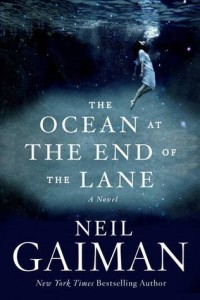
the ocean at the end of the lane - neil gaimanThe first night my husband read me a chapter from The Ocean at the End of the Lane by lamplight as I nursed our son, I was certain the story was more than made up. As the narrator returns to his childhood home, I could feel Neil Gaiman flashing glimpses of his childhood into the story. Something about smudging the line between truth and fiction made the book even more of a joy to read (and to listen to) as we followed the fantastic journey of a man reliving a few magical and terrible days in his childhood.

Metafictional Clues

The dedication was my first clue that this book was not as fictional as we usually consider fiction to be. Gaiman writes, “For Amanda, who wanted to know.” I could just picture his wife asking him about his childhood one night and Gaiman spinning this elaborate tale. The epigraph, from Maurice Sendak, deepens the impression that we’re reading a somewhat true story. It reads, “I remember my own childhood vividly… I knew terrible things. But I knew I mustn’t let adults know I knew them. It would scare them.” That epigraph also happens to capture perfectly the feeling of this entire book.

The story begins with a man (unnamed) returning to a half-remembered English hometown for a funeral. There is something so hauntingly true as Gaiman writes about answering the standard questions asked by people who knew you once. They ask about your “work (doing fine, thank you, I would say, never know how to talk about what I do. If I could talk about it, I would not have to do it. I make art, sometimes I make true art, and sometimes it fills the empty places in my life. Some of them. Not all).” Although Gaiman never specifies what type of art the narrator makes, I felt like he was opening his soul in those lines and that coupled with the biographical similarities meant that for me the narrator could not have been anyone else but Gaiman from there on out.

In the end it’s not at all unusual for writers to put themselves in their work whether it’s gathering small observations from their daily lives, mining emotions they have felt, or drawing on actual events. But I was delighted to hear in the acknowledgements, “The family in this book is not my own family, who have been gracious in letting me plunder the landscape of my own childhood and watched as I liberally reshaped those places into a story.”

While metafiction is often defined as a work that brings attention to that work’s status as an artifact, in this case the metafictional elements were subtle enough that they made the story feel more like real life. If you’re familiar with Gaiman’s love of the fantastic, you know what a wonderful feat this is.

Shimmering Truth

The line between fiction and truth isn’t the only one Gaiman dances in The Ocean at the End of the Lane. He also plays with the way memory affects truth. This starts with how memories start to unfold on the narrator as he drives to where his childhood home once stood. The story opens up and we meet a wonderful cast of characters including his childhood friend, Lettie Hempstock, who isn’t as young as she may seem.

I absolutely will not spoil the story for you here, but it’s interesting to note both the way certain memories and events are (almost literally) snipped out of the narrative and the way the narrator’s recollections shift (especially as the story comes to a close). Even the characters change shape between the narrator’s youthful and adult interpretations of them.

As old Mrs. Hempstock says, “Didn’t I just say you’ll never get any two people to remember anything the same?” Sometimes those two people are who we were then and who we are now and I’ve never seen a book capture that difference more perfectly.

Reading Aloud

Ever since my dad read my brother and me the entire Lord of the Rings trilogy, I’ve loved being read to, but it’s an act that takes a lot of dedication on the part of a reader—especially when you’re dealing with novel-length works. For example, I’ve been reading Jo Nesbo’s The Snowman to my husband since April of 2013 and we started The Arabian Nights way back in 2011. So when my husband settled cross-legged on the floor of the darkened nursery and unfolded the case for his Kindle, I scarcely dared to hope that reading was on his mind. And I never thought we’d finish the whole book in under two months.

Being read to is a different (and not always positive) experience. For one thing, I couldn’t picture the names of the characters which made them seem more ephemeral to me. I also found that by not seeing the words of the text I had more trouble recalling what happened the time before.

But the upsides were so amazingly wonderful that I’m already begging my husband for the next book (and may even finish reading those other books to him someday). For one thing, that ephemeral feeling that came with not having seen the words on the page worked for this book. Because I wasn’t turning pages, I felt like I was being told the story by the person who experienced it. Secondly, because we were experiencing the book together, we’d sit after each chapter and talk through what just happened. He was reading the book for the second time and was loving seeing it new through my eyes and I was loving digging for hints and clues about what was to come.

And then there’s the experience of being read to. Each night that my husband sat on that floor I felt so surrounded by love. I can’t wait until we can share that experience with our son (in any way that we think he might remember it). For now, as I finish off the brutal mystery of The Snowman I’ll just be grateful that we can read as adult of material as we please for a few more months.

It turns out that Gaiman read The Ocean at the End of the Lane aloud to his wife each night as he was writing it. Some stories just come alive that way. We’re still looking for the perfect next book to read aloud. If you have any recommendations, I’ll gladly take them.

If you want to embark on an adventure with a Gaiman-like boy and the Hempstock family, pick up a copy of The Ocean at the End of the Lane from Bookshop.org. Your purchase keeps indie booksellers in business and I receive a commission.
Filed Under: Books, Western Europe Tagged With: neil gaiman, reading aloud, the ocean at the end of the lane, Truth

Creating and Sustaining Empathy in Alphabet by Kathy Page

August 9, 2015 by Isla McKetta, MFA 2 Comments

alphabet - kathy pagePicking up Alphabet by Kathy Page, I had no idea what to expect. I hadn’t read the back or the press release that accompanied my review copy. For all I knew, it was some experimental work based entirely on word play. It wasn’t, the narrative and language are much more conventional than that, but I’m so glad I went into this book blind because it allowed me that rare chance to encounter the story and the characters on the author’s terms with all the craft of reveal that entails. So if you want to read this excellent book as blind as I did, stop reading here. Trust me, it’s worth it.
The Man Behind the Crime

When we first meet Simon Austen, he’s being inducted into prison. His clothes have been taken and a guard is examining his property, which seems to consist solely of a sealed letter written by his mother and given to him by a social worker. We can tell from the language that the story is taking place in Britain. Simon seems young and shell-shocked. We have no idea what crime he’s committed or how long he’s in for but already Page has made him seem vulnerable and already it’s easier to care more about the man than what he did. An unusual slant in today’s society and one that makes the book.

“He thinks how he could die here. Be killed. Start using drugs and do the job himself. Just get old… and all of a sudden, how badly he wants what he’s not had, all of it, even not knowing what it is!” – Kathy Page

In the second chapter we see Simon trying to learn to read. I immediately had sympathy for someone who the system had failed and who was trying to make better of himself. It might help that my grandfather taught inmates to read, but watching Simon, at an age where he’s eligible for prison, learn the alphabet and how letters make sounds is truly poignant (without being sappy). We see touches of his concern for the health of his tutor and then we see Simon succeed well enough that he begins writing letters for others.

We’re getting to know the man behind the crime and we’re learning to empathize with his situation, even before we have any idea what landed him behind bars in the first place.

Ambiguity

Simon is not always on the up and up, and (based on my coursework in criminology rather than my own personal experience) this book shows a realistic picture of prison and prisoners. Simon tries to fill his need for human connection by starting a correspondence with a stranger. Trouble is he lies about who (and where) he is. As a kid, I remember my mom’s Avon lady was married to a man in prison so every visit we had with her included at least some amount of time talking about his wrongful conviction. This turn in the story made me deeply uncomfortable, but because I’d already bonded a bit with Simon, it served to flesh him out as a three dimensional character rather than turn me off completely.

We do eventually learn what Simon’s done, and it is not pretty, but by that time we understand who he was when he did it and where he was coming from. It doesn’t excuse his actions, but it does give a lot of context especially as he tries and both succeeds and fails at bettering himself.

One of the things I’m finding most interesting about writing this review is how much I want to judge him even as I want to humanize him. I think that says a lot about how we perceive prisoners/criminals in this society. Even though Simon is deeply human (aren’t we all) and in many ways a victim of his circumstances, a part of me still deeply fears his early lack of control.

The beauty of Page’s writing is she allows the wholeness of Simon to evolve in front of us without passing her own judgment. The story is carefully crafted, but because the range of experience was so rich, I never once felt emotionally manipulated. Instead I felt opened up and like I was being allowed to see Simon and his experience from new and interesting angles.

The Alphabet

One of the things I’m going to continue to ponder about Alphabet is the relationship of the title to the book as a whole. There are easy references like when Simon is learning the alphabet in order to learn to read or later when he constructs an alphabet-type narrative for a prison newsletter. There are also deeper references including the alphabet of women he learns from along the way and the alphabet of the words he tattoos upon his body. Still, I think there’s something more here and if you read the book and want to share your ideas, I’d love to hear them.

It’s not often that I read a book set in prison. It’s even less often that I read a book set in early 1980s Britain. Even more rare is that I’d enjoy the combination of the two, but Alphabet is a stunningly well written and deeply human book. The nuance of relationships and character development is hard to equal. Yet another first class book from Biblioasis that’s stretched my reading horizons, even if Alphabet falls as far from your normal reading subject matter as it does mine, I highly recommend trying out this book.

If this review made you want to read Alphabet, pick up a copy from Powell’s Books. Your purchase keeps indie booksellers in business and I receive a commission.

Filed Under: Books, Western Europe Tagged With: characterization

Kazuo Ishiguro’s The Unconsoled and the Nouveau Roman

March 8, 2015 by Isla McKetta, MFA 4 Comments

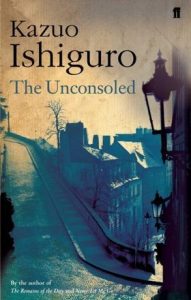
the unconsoled - kazuo ishiguroI started reading The Unconsoled by Kazuo Ishiguro because it’s one of those really thick hardbacks that’s been sitting on my to-read shelf forever, I love Ishiguro, and I’m trying to read through that shelf in the five months before this room becomes a nursery and all the books have to be moved to their new home. What I didn’t realize is how much the book would blow my mind or that I was reading it at exactly the right time.

Big Books

As the tote bag goes, “I like big books and I cannot lie.” Although I frequently leave them sitting on the shelf for far too long because they don’t fit in my purse and a lot of my reading happens on a bus. Ishiguro went with me this week anyway all week because I was immersed in this book.

But what’s odd about The Unconsoled is that it’s the first book I’ve seen by Ishiguro that is long. It’s thicker than the other three books I have of his (An Artist of the Floating World, The Remains of the Day, and A Pale View of Hills) combined. In fact, I swear I have Never Let Me Go around here somewhere and that fourth book would make the inches just about even.

So what’s going on when a writer known for his understatement and his concision suddenly writes a 500+ page tome that spans four days? Something very unexpected. In fact, although I’m no literary theorist, I think Ishiguro was writing a modern version of the nouveau roman.

The Nouveau Roman

What the what? According to Wikipedia, “nouveau roman” was first used in the 1950s to describe the work of a few French writers who were experimenting with form. I think of Alain Robbe-Grillet and Marguerite Duras and the way their work can feel so disjointed that you’re entering a new, wonderful dimension.

What happens in The Unconsoled is you think you’re entering a novel about a pianist (Ryder) on tour in a strange city according to a schedule he never quite receives, but it quickly unfolds that the book is just as much about the people around him. Doesn’t sound too unusual too far, except that the book is really about the people around him. As in, the hotel porter goes on for pages about how his profession has been denigrated over the years in the entire chapter it takes to settle Ryder in his room.

It started out as kind of maddening, but when I saw what Ishiguro was doing by creating these huge, looping speeches where  the “side” characters used so many words to say so few things, I started to understand the effect (and why the book was driving me so batty). From one angle he’s highlighting how small the concerns of the townspeople are and how wrapped up they are in themselves while from another he’s concealing the trick he’s using to disorient readers. Because as readers it’s our job to follow the narrative, so we get immersed in this winding tale of nothing and then that winding tale of nothing and we’re grasping for information or a toehold at the same time Ryder is. We become the main character.

Meanwhile, Ryder’s experiences shift as he’s talking with these characters. Sent to make peace between the hotel porter and his daughter and halfway through a conversation with her he starts to recall memories of their life together. Eventually he recognizes her child as his child. But it’s not so simple, because this isn’t a “big reveal” kind of novel and Ryder continues to have trouble recognizing simple things like the house they shared, so we (and he) are kept disoriented the entire time.

Reading this book felt a lot like watching Last Year at Marienbad which I also find completely maddening—but fascinating. In fact, I still haven’t finished the book (I wanted to put it down so many times but these effects are compelling). I had to come here to this blog to chat with you about what Ishiguro was doing to my brain before I could go back into that world and see what (if anything) happens.

Where Art Meets Life

I’m enjoying reading this book right now because Ishiguro is currently out in the world touring his latest book, and I can only imagine that The Unconsoled is actually an artistic expression of what it feels like to be on a book tour. Ryder is in a small, unfamiliar town surrounded by people who are all too familiar with him and have all kinds of wants, needs, and desires of him. He’s following along as well as he can but he can’t even remember where he’s supposed to be. And his relationship with his family (who by now has grown somewhat unfamiliar and distant) pulls at him all the time.

It made me not ever want to tour a book.

I don’t know yet if The Unconsoled is about more than that (I still have about 200 pages to read) but I can tell you that this book, like all of Ishiguro’s books, is masterfully done. I may not love the feeling of being inside Ryder’s world, but I am enthralled by the artistry that created it.

If you want to get lost in The Unconsoled, pick up a copy from Bookshop.org. Your purchase keeps indie booksellers in business and I receive a commission.

Filed Under: Books, Western Europe Tagged With: kazuo ishiguro, nouveau roman, the unconsoled

Neil Gaiman Reads A Christmas Carol this Christmas

December 25, 2014 by Isla McKetta, MFA 1 Comment

We added a new tradition to our Christmas routine last night. Usually our literary Christmas Eve consists of of my husband reading O. Henry’s “The Gift of the Magi” to me (while I weep) and me reading Lawrence Ferlinghetti’s “Christ Climbed Down” to him (while he patiently tries to appreciate the Beats). But seeing on Twitter that Neil Gaiman had done a reading of Dickens’ A Christmas Carol was too delicious to resist.

I had a moment of pause when I saw that the reading was nearly an hour and a half long, but this fantastic performance made time fly past and I knew I had to share it with you. What made the reading extra special is that Gaiman is reading from a performance copy of the work that Dickens himself had annotated. So stop right here for now and go enjoy this classic with your family. We can talk about the writing part after the holiday…

The Last Time I Read Dickens

My husband and I were discussing last night that neither one of us has earnestly read anything by Charles Dickens. There were the usual high school tortures of reading excerpted versions of Great Expectations as fast as I could to get the right information to pass the test (we had a teacher who was famous for asking what Pip had for breakfast on his way to London – never did find the damned answer but I know it was symbolic). I think my dad (who is a fabulous reader) also read me Oliver Twist (and maybe more), but my adult experience with Dickens really consists of film adaptations (I watch the Alfonso Cuaron version of Great Expectations at least once a year because it’s so beautiful and so un-Dickens).

How Does the Text Compare with the Films?

What started to emerge last night from listening to Gaiman read A Christmas Carol is a close look at how close (and how different) the text is to the films. So that’s what I’m going to share with you here. Please forgive (and feel free to correct) any inaccurate memories I have of the films. It’s been awhile since I watched either the iconic George C. Scott version or the Scrooge McDuck version of this story.

Three Nights of Visitation

We all remember that there are three ghosts who visit Scrooge, but I was surprised to hear Gaiman read that those ghosts are meant to visit on three separate nights. In the films it’s always compressed to one, which makes total sense from a narrative point of view, because three nights is a long time and you don’t really get to see Scrooge in the day between them (what would be the point?). In fact, and forgive me if I misheard this, but it seems like Dickens himself fudged a bit by having the third night in fact happen after midnight of the second. Regardless, an interesting inconsistency.

Jacob Marley as Character

In the films I feel like we barely get to know Marley. Evil partner, just who Scrooge became in life, has a bandage around his head when he announces (in ghostly form) his regrets to Scrooge, etc. But in the text, there’s a really poignant moment when Scrooge first enters his home after work and before any visitation where we learn that it was Marley’s home and who Marley really was. This allows us to see better what Scrooge’s origins are and it also takes some of the weight of direct meanness off of Scrooge. This becomes important later.

You get to know other characters, too. Especially charming is “watching” the young people chase each other around Fred’s party. Tiny Tim is just as annoying. Sorry about that. Some things never change.

Amazing Description

One of my favorite moments in the animated version of the film is watching Scrooge’s doorknocker turn into the face of Marley. I had no idea that was actually in the book – and so well described, too. I suppose that’s always the way when going from a text medium to a visual one – that you turn that luscious description into actual pictures – but listen closely for some pretty great descriptive moments (like when he compares the smell of pudding to the smell of laundry – favorably).

Story Changes

Perhaps one of the saddest moments for me in the George C. Scott interpretation of this tale is when the young Scrooge is left at school over Christmastime. In the reading I heard, this never happens. Now I’m not sure if that moment actually doesn’t happen in the story or if Dickens decided to cut bits to keep his reading manageable, but without that vignette, Scrooge turns into someone who is a humbug by choice not by circumstance, which is a very important difference.

And later, when Scrooge gets the Christmas spirit, in the text he actually sends the prize turkey to the Cratchit family in secret (am I wrong that George C. Scott made a grand entrance with that bird?), which makes his later torture of Bob over his lateness even more excruciating.

Tone

Perhaps the most important distinction between the text and any of the films is that in the text Scrooge is really and truly ready to change after being visited by the second ghost. He’s seen what everyone else is doing and doesn’t need to see his death – that’s just twisting the knife.

My Christmas and New Year

In a few minutes I’ll snuggle back up with my husband and try to sleep until it’s time for stockings and presents and crepes. But first I wanted to do two things. The first is that I want to wish you a very happy holiday season and new year. Whatever you celebrate, I am so glad to share this literary space with you and I hope we can do so for a good long time.

Which brings us to the second thing. You might have noticed that I’ve been a very erratic blogger lately. First it was India, but now I have a much better (and longer-standing excuse). Sometime around the beginning of August, Clayton and I are going to have our first child. That means we’ll finally have someone else to torture with my literary Christmas traditions. It also means that between morning sickness and general exhaustion I’ve been a poor reader and an even poorer blogger lately. I miss you and I miss writing here, but many days I just can’t.

So count on this blog to be sporadic in the next year or so, but know that I will write when I can.

Thank you again for sharing the world of words with me. Writing this for you and reading your responses enriches my writing and my life. Merry Christmas to all, and to all a good night (morning).

Filed Under: Books, Western Europe

Rereading Brave New World for Banned Books Week

September 21, 2014 by Isla McKetta, MFA 6 Comments

brave new world - aldous huxleyIt had been a very long time since I read Brave New World by Aldous Huxley. I own (and proudly wear) the t-shirt from Out of Print Tees, but I was starting to get embarrassed when people made soma references when they saw me in it and I had no idea what they were talking about. So this week, in honor of Banned Books Week, I reread this classic novel and what I found shocked, impressed, amazed, and disappointed me. But I’m not sorry I read it.

Fighting Utopia

I’ve gotten so far inside dystopias that I’ve forgotten what it’s like to read about a utopian society. In 1984 (as best as I can recall), it’s pretty clear that Big Brother is a bad thing and that society is squeezing the very humanity out of people. Whereas in Brave New World, there are large groups of people who never become dissatisfied throughout the book. And as a reader I was left questioning how bad is the bad, really?

“All conditioning aims at that: making people like their unescapable social destiny.” – Aldous Huxley

Do I agree with genetically engineering some people to be lesser? No. Breeding a populace of slaves is bad. Not too much grey area there. But when it comes to a populace zoned out on pleasure, I have fewer qualms. I hate that the creative thinkers are exiled, but I kind of wanted to go away to the Falkland Islands with Helmholtz.

Maybe I think we are already in this brave new world and maybe that’s Huxley’s point. But I do not believe that we can force people to engage in the world and care about change. I don’t believe we’re as socially mobile as we pretend. And that’s probably the biggest difference between the younger me who first read this and the me now. I’m now content with my own desire to change the world and I’ve lost the feeling that I can rally others. I’ve lost the drive to make people live up to their own ideals. I feel somewhat disappointed writing those words and yet also pragmatic. Something to think about there…

“Imagine the folly of allowing people to play games which do nothing whatever to increase consumption.” – Aldous Huxley

Introducing a World

The way that Huxley lead the reader straight into this world and gave us a tour (literally) of the London Hatchery is one of the best introductions to a new society that I’ve ever seen in a book. I think, honestly, that it’s part of the reason I had trouble fighting the worldview. Instead of reacting in immediate disgust, because I have a pretty open (suggestible) mind, I was thinking, “Oh, that’s an interesting way of…” and trying to understand what they were doing.

But there were moments that made my blood run cold. And that’s what’s truly effective–like someone pouring a bucket of cold water over you in a hot tub. This starts with the description of the Bokanovsky Process. It was fascinating to see how they grey 96 humans from one egg. But it was also terrifying. The idea of stunting a growth process to get something to “bud” makes sense to me with tomatoes, but when it comes to humans… *shudder*

As a writer, even if you have no interest in this book overall, you must go and read this first chapter carefully. It will change your world building forever. Oh, and read Chapter Three, too. It is the best inter-splicing of narrative I’ve seen since The Land at the End of the World. And the way Huxley builds a crescendo by shortening the passages the farther in you get is mind-bogglingly well done.

The Ideological Tangent

I thought I was done with ideological rants after Ayn Rand. I still haven’t read all 70 or so pages of John Galt’s rant in Atlas Shrugged. So when I got to the conversation between Mustapha Mond and the Savage in Brave New World, I was surprised to see that this was the only section younger me had highlighted. Some of the things I highlighted, like, “You can’t play Electro-magnetic Golf according to the rules of Centrifugal Bumble-puppy” were clearly in-jokes that I thought would make me sound smarter if I ever had the chance to quote them.

Others, like “You can’t have a lasting civilization without plenty of pleasant vices” and “truth’s a menace” were things that still spark something in my brain. In some ways they ring true, and in others they do not, and it’s that bridge between the two spaces that I find really fascinating.

The Savage Past

What I found most disappointing about this book was the shock and awe of the savage past. Bernard and Lenina’s reaction to it didn’t impress anything upon me and I simply didn’t care. The book waned overall for me from then on because I was not invested in that dichotomy.

Banning Books

I’m flat out against censorship and the banning of books so I was very curious as I read this book why it would be banned or challenged. Turns out the reasons are myriad: sexuality, anti-religious views, depictions of indigenous peoples. I was bothered by parts of the book, sure, but they made me think and I always appreciate that. I suppose people challenge and ban books from fear. Fear that people aren’t smart/civilized enough to make their own decisions, fear of new or different ideas, fear for the children.

In my utopia we can hold a multitude of contrasting ideas. We can be open to new worldviews and inputs because we trust in our ability to think and reason. We can learn new ways of doing things and hold fast to some old ones that work. We are not afraid of what the world will become once we taste that forbidden fruit because we believe that our humanity will keep pushing us to be better as individuals even when we cannot affect the whole. And by that token, the whole gets stronger, smarter, kinder, more human. In that way, I have not given up on my optimism or on the world around me at all.

If you want to test out your own version of utopia, pick up a copy of Brave New World from Bookshop.org. Your purchase keeps indie booksellers in business and I receive a commission.

Filed Under: Books, Western Europe Tagged With: aldous huxley, banned books week, brave new world

  • « Previous Page
  • 1
  • 2
  • 3
  • 4
  • 5
  • 6
  • …
  • 10
  • Next Page »
  • Goodreads
  • RSS
  • Substack
  • Tumblr

Get New Reviews Via Email

My Books

Polska, 1994

Polska 1994

Clear Out the Static in Your Attic

Clear Out the Static in Your Attic_cover

Recent Posts

  • The Exquisite, Excruciating Details of Being Human in Flashlight, Thunder Song, and Kairos
  • The Depth of Simplicity in Beyond Where Words Can Go
  • bell hooks and Kim Hyesoon on Transgression and Creation
  • The Pure Power of Rage in The Bride by Maggie Gyllenhaal
  • Writing from the Margins in No Friend to This House

What I’m Reading

Isla's bookshelf: currently-reading

Birds of America
Birds of America
by Lorrie Moore
The Ecstasy of Influence: Nonfictions, Etc.
by Jonathan Lethem
The Souls of Black Folk
by W.E.B. Du Bois
Bomb: The Author Interviews
by BOMB Magazine
On Writing
On Writing
by Jorge Luis Borges

goodreads.com
Privacy & Cookies: This site uses cookies. By continuing to use this website, you agree to their use.

To find out more, including how to control cookies, see here: Cookie Policy
Content copyright Isla McKetta © 2026.