• HOME
  • REVIEWS
    • Books
      • Africa
      • Arabia
      • Asia
      • Eastern Europe
      • Latin America
      • South Pacific
      • USA & Canada
      • Western Europe
    • Other Media
      • Art
      • Film
  • EDITING SERVICES
  • ABOUT
    • Bio
    • Creative Writing
      • Clear Out the Static in Your Attic: A Writer’s Guide for Transforming Artifacts into Art
      • Polska, 1994
    • Artist Statement
    • Artist Resume
    • Contact
    • Events
    • Professional Portfolio
  • BLOGROLL

A Geography of Reading

"It is by reading novels, stories, and myths that we come to understand the world in which we live." -Orhan Pamuk

The Road Home Asks: Who Are We On the Inside?

September 29, 2013 by Isla McKetta, MFA Leave a Comment

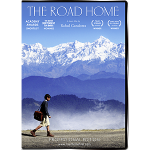
The Road Home - movieI understand why we use stereotypes. They are easy shorthand in a world where we don’t want to take the time to look deeply at the people around us–beyond their clothes and their gender and the color of their skin. But running around judging each other based on these exterior factors means we miss the richness of the lives around us. Rahul Gandotra’s short film The Road Home beautifully exposes this paradox.
The film starts with a young boy running away from boarding school in the Himalayas. And it’s easy to assume from his brown skin that he belongs there, but his blue polo and nattily knotted sweater stand out. It soon becomes clear that this boy, Pico, doesn’t speak Hindi at all and he’s running home to England. He hires a local cab driver (Kuldeep) to drive him to New Delhi but Kuldeep hassles him about not knowing his heritage so Pico decides to walk the rest of the way. Along his journey, we start to see how out of place Pico really is–both in India and the world.

“But I Don’t Feel Indian Inside”

Director Gandotra is a true third culture kid having grown up in eight different countries and the screenplay (co-written by Gandotra and Milja Fenger) captures that feeling of being from everywhere and nowhere.

That third culture kid feeling (or as Pico Iyer calls it, The Global Soul) is one I share but not one I talk about very often because I feel like there are so few people who truly understand it. My family is white and I was born in Idaho, but I spent time in Chile growing up and my brother learned to read in Spanish before English. I crave hard white rolls from a certain German bakery and when I say Neruda speaks to my soul, I mean something slightly different than a lot of people do. When I read Isabel Allende’s memoir of exile, My Invented Country I felt that I too had invented Chile, at least in my memories. And then there’s the time I spent in Poland…

I am an American and I mean that in the richest possible way. And sometimes I feel like I have more in common with the Somali girls giggling in the mall in their half-traditional, half-American outfits than I do with the woman at the pretzel shop. But I suppose I don’t know her story either. I never thought to ask.

What Does “Worldly” Mean to You?

In The Road Home when Pico has to be taught how to eat daal by a French woman named Marie, I felt for him and how out of place he was. Then we learn that Pico’s father has sent him away so that he’ll have the proper credentials to get into the London School of Economics and later Harvard so that he can become an international businessman. There was something so elite about it all and yet it rang true. Pico’s experience abroad was a check box for admissions, but he wasn’t ever going to be expected to mix with the locals just as we sometimes travel abroad and have drinks at the Hilton where the bartender speaks our language.

I thought for a moment that I hadn’t aimed high enough with my own admissions process, but I didn’t want to see the world from that pinnacle either, I wanted to be part of it.

When Pico runs into a British couple on holiday. They assume that he’s local and the man tries to speak to him in Hindi. It’s only when the woman addresses him in British English and Pico replies with an accent that’s much more posh than hers that we see he doesn’t fit in in England either–at least not where the couple comes from. He is out of place everywhere.

“What’s So Wrong With Being Indian?”

As I’m writing this, it’s been barely a week since the first Indian American Miss America debacle. If you don’t know what I’m talking about, just imagine a group of people who can only see “other” and how that must terrify them. Poor knowledge of geography and racist comments aside (not that it’s easy to ignore either), these events reminded me how one-dimensional we ask the people around us to be, and I wonder how far we can really get as a world when we fail to see the richness of experience and heritage in other human beings.

So when Marie asks Pico, “What’s so wrong with being Indian?” and in return he asks, “What’s so wrong with being English?” what’s important is that Pico isn’t either. He’s both, and the beauty of this film is how he starts to find that unique blend of his own identity. I’ve spoiled most of the major plot points for you, but this film isn’t about what happens, like the best literary fiction, it’s about how the moments are portrayed. Go watch it. You might be surprised how much you can learn about yourself in only 23 minutes.

Filed Under: Asia, Film Tagged With: film review, india, race, the road home

Inspiration in Iteration: Italo Calvino and Pixar in La Luna

November 20, 2012 by Isla McKetta, MFA 2 Comments

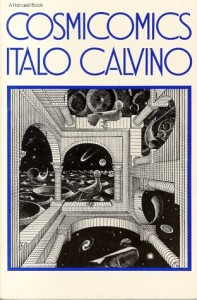
Cosmicomics Italo CalvinoAs I was reading Cosmicomics by Italo Calvino this weekend, I felt like the story “The Distance of the Moon” was somehow familiar. I had seen it—with my eyes, not in my imagination. But it wasn’t quite the same story. It took a few hours for me to remember that I was thinking of Pixar’s La Luna, the short film at the front of Brave.
Sometimes I forget how much art and literature feed off one another. I shouldn’t because my writing is often inspired by other art forms. At this very moment, I am watching a random film and taking notes in a separate document on the interactions of the characters to help me understand the characters in my latest novel. But I was surprised (and delighted) to find something I consider to be relatively obscure had inspired a Pixar short.

Italo Calvino vs. Enrico Casarosa and Pixar

This could become a post about pop culture versus art, but I’d rather not make those distinctions, not today anyway. What interested me about the Calvino/Pixar relationship is that screenwriter Enrico Casarosa and Pixar were bringing this beautiful story of people rowing boats out into the sea to climb ladders onto a low-hanging moon to an audience who would mostly not read Calvino.

Though the setting of “The Distance of the Moon” and La Luna is the same and both are filled with childlike wonder, there are substantial differences between the stories. “The Distance of the Moon” is written for adults and in that wonderfully concise Calvino fashion, contains an undercurrent of sexuality and an allegory for unrequited love. The characters change from the page to the screen and the elements of danger and loss are omitted. Instead, Casarosa presents a film about family relationships and how the brightest ideas sometimes come from the youngest minds.

The Beauty of Variations

Chinese painters repaint masterpieces to learn the strokes of the masters who came before them. But can we ever create the same artwork or do we always leave a piece of ourselves behind?

I started thinking about “The Street of Crocodiles” by Bruno Schulz and the short film by the Brothers Quay (known for making music videos for Tool) of the same name. The story by Schulz is colorful and alive, whereas the film is truly creepy and compelling.

What I love about this process of iterative creation is that each new interpretation feels like rediscovering a story as each artist adds bits of themselves to the project.

Calvino and Schulz are inextricably linked in my reading habits. It’s like I’m locked in some Western European tapestry where Calvino creates the clean yet inventive geometry governing the weft while Schulz weaves and embroiders the warp with his crazy wild descriptions. It’s pretty awesome.

If this review made you want to read the book, pick up a copy of Cosmicomics from Bookshop.org. Your purchase keeps indie booksellers in business and I receive a commission.

Filed Under: Books, Film, Western Europe Tagged With: Bruno Schulz, Italo Calvino, la luna, Pixar, the street of crocodiles

Bringing Light to Characters in In Darkness

July 19, 2012 by Isla McKetta, MFA Leave a Comment

Writing rich characters can be difficult. I’ve been told I should take a stereotype then add something unexpected—as though two dimensions plus one quirk equals a round character. But humanity is more than two layers deep and your audience can tell the difference. Agnieszka Holland’s film In Darkness, written by David Shamoon, displays some of the richest characters I’ve seen in a while.

I will admit to Holocaust fatigue and I was leery of this film for that reason. I’ve been reading various memoirs and histories of the horrors for over two decades. While there is no end to the human suffering that the Nazis inflicted, there is a limit to the nuance I can absorb from these stories. It was daring to try and tell a new story. But the movie succeeded.

I don’t normally review movies (though I might start doing more) but this one is related to TWO books: In the Sewers of Lvov by Robert Marshall and The Girl in the Green Sweater: A Life in Holocaust’s Shadow Krystyna Chiger.

Our Hero

The protagonist, Pan Socha, is a Polish sewer worker during WWII who makes extra money on the side by looting the homes of recently relocated Jews in Lvov. When he hears some Jews trying to escape the ghetto by breaking into the sewer, he could make the obvious choice—the one that is “in character,” but his character is richer than that. Throughout the movie he continues to wrestle between his selfish motivations (greed, not getting shot by Nazis) and his need to do the human thing and help save those lives.

Socha continues to wrestle with his base greed throughout the film, but he also displays growth. There is a moment where he defends Jews as a people (a very dangerous thing to do) while lecturing his friend in a public place. At another time, he steps from the shadows to save the life of a Jew who had given him nothing but trouble.

Socha made Spielberg’s Oskar Schindler look two dimensional. Yes, there is the moment at the end when Schindler cries because he could have saved more Jews, but it felt like a tacked on emotion rather than a breakdown. Socha evolves and grows throughout the film, and though he is imperfect, I loved him for it.

Other characters

Socha’s wife has a central conflict that is very simple, but the way it manifests is beautiful and rich. She initially teaches her husband that Jews are just like everyone else and gives him a lesson on religion to prove it. But when she finds out he is helping Jews, she is livid. You can see her wrestling between her humanity and her need to preserve her family. She does this over and over throughout the film.

Klara Keller also has conflicting desires—she is trying to keep alive the sister she never really liked. Yanek is forced to choose between his wife and his lover and even then can’t find peace. In fact, every character in this film seems torn which befits a movie about such a turbulent time.

Perhaps that’s where some Holocaust portrayals fail—they turn into tales of good and evil. Holland and Shamoon forced me to examine the good and evil within myself. Perhaps the best reason to create robust, lifelike characters is to encourage your readers to examine that complexity within themselves.

Note: I completely failed to credit the writer in the original post. This has been revised to reflect the exemplary work of David Shamoon.

Filed Under: Eastern Europe, Film, Other Media Tagged With: characterization, Holocaust, Poland, round characters, World War II

James Ellroy and Sexual Violence

May 22, 2012 by Isla McKetta, MFA 2 Comments

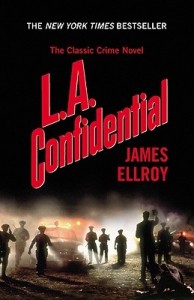
LA Confidential - James EllroyWatching L.A. Confidential again last night, I started to reflect on my long history with James Ellroy. I was young when I first started reading him—maybe eleven or twelve—and The Black Dahlia was not my first of his books. When I started with Clandestine or Brown’s Requiem, the noir voice had me, a girl who had grown up on the movie The Big Sleep but never read Raymond Chandler, hooked. The Black Dahlia was the second book of his that I read and as a burgeoning woman, I wanted to be as beautiful and as desired as Betty Short. I was young enough and immortal enough that the extreme violence committed against her didn’t even phase me. Even after reading L.A. Confidential and several other books, I didn’t key into it or how it might be affecting me.

If you know anything about Ellroy, you know that his mother was brutally murdered and that his books, especially those early ones, are places where he is dealing with that trauma. Elizabeth Short’s death was not dissimilar to his mother’s and there is often at least one Bud White in each early James Ellroy novel trying to save the girl—any girl—from harm. I believe that the resulting works show a respect for women, even if it borders on unhealthy worship.

I was still very young and unsettled when I watched the premiere of L.A. Confidential in 1997 at SIFF. I still wanted to be one of the women that the foul-mouthed writer would worship, and I still thought murder, even brutal serial killer style murder, was interesting enough to take Bob Keppel’s class on Ted Bundy.

In the last few years, maybe as I’ve begun to see myself more as a mortal person not merely a sexual object, I’ve started to wonder about the sexual violence against women we expose ourselves to through various media. I used to enjoy Criminal Minds, but now I realize that (despite some smart detectives) the stories are populated with women as victims and the violence is often heinous and sexual. The last few years, the torture rape filled horror movies have ruined for me one of my favorite film genres. The only conversations I can have about The Girl with the Dragon Tattoo are about whether the sexual violence is for titillation and I’m still not convinced it isn’t.

Violence happens. I’m headed to Croatia soon and one of the things I can’t get out of my mind is the rape camps of the Bosnian War and that we can barely talk about it still. Humans are animals and at times that is far too evident. I don’t think we should ignore it, but I also don’t think we should normalize it. At the same time, it can be interesting to learn about those uncontrolled parts of ourselves.

I try not to read about rape (no more Stieg Larsson for me and I’ll skip The Kite Runner, thank you). I did write about rape in Polska, 1994 because I wanted to try to understand it. I’m glad I did, because through writing about Magda’s victimization, I was able to see myself as a whole person (rather than a victim) with power in my actions. My fear is that for many people scenes of sexual violence and torture are becoming sources of excitement rather than cautionary and we are teaching our children that women are victims not people. Even James Ellroy saw women as victim-objects to be saved.

I don’t have any answers, but the long-lasting effects of the victimization of women in media is something I will continue to think about.

If this review made you want to read the book, pick up a copy of L.A. Confidential from Bookshop.org. Your purchase keeps indie booksellers in business and I receive a commission.

Filed Under: Books, Film, USA & Canada Tagged With: book review, James Ellroy, L.A. Confidential, Murmurs of the River, sexual violence, Stieg Larsson, The Black Dahlia, The girl with the dragon tattoo, The Kite Runner

  • « Previous Page
  • 1
  • 2
  • Goodreads
  • RSS
  • Substack
  • Tumblr

Get New Reviews Via Email

My Books

Polska, 1994

Polska 1994

Clear Out the Static in Your Attic

Clear Out the Static in Your Attic_cover

Recent Posts

  • bell hooks and Kim Hyesoon on Transgression and Creation
  • The Pure Power of Rage in The Bride by Maggie Gyllenhaal
  • Writing from the Margins in No Friend to This House
  • Tyranny and Narrative Timelines in Heir, Stones from the River, and Homegoing
  • The Books I’m Carrying into 2026

What I’m Reading

Isla's bookshelf: currently-reading

Birds of America
Birds of America
by Lorrie Moore
The Ecstasy of Influence: Nonfictions, Etc.
by Jonathan Lethem
The Souls of Black Folk
by W.E.B. Du Bois
Bomb: The Author Interviews
by BOMB Magazine
On Writing
On Writing
by Jorge Luis Borges

goodreads.com
Privacy & Cookies: This site uses cookies. By continuing to use this website, you agree to their use.

To find out more, including how to control cookies, see here: Cookie Policy
Content copyright Isla McKetta © 2026.